
Wednesday, February 18, 2009
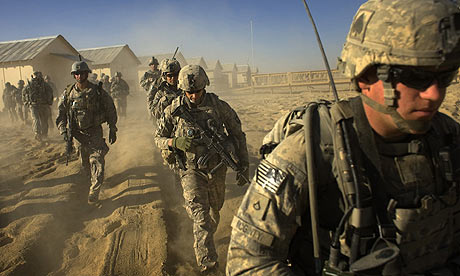 US President Barack Obama has approved the deployment 17,000 additional troops to Afghanistan, as he said the situation in the Afghan-Pakistan region demands immediate attention. "This increase is necessary to stabilize a deteriorating situation in Afghanistan, which has not received the strategic attention, direction and resources it urgently requires," Obama said in a statement as he approved his commander's request to send more troops to the war-torn country. Immediately, Secretary of Defense Robert Gates announced the deployment of more than 12,000 troops to Afghanistan. This includes 2nd Marine Expeditionary Brigade, consisting of 8,000 Marines and 5th Stryker Brigade of 4,000 soldiers.
 While the Marines would hit the ground late spring 2009, Stryker's are likely to be in Afghanistan in mid-summer. Deployment of another 5,000 additional troops to support these combat forces would be announced at a later date, the Pentagon said. Such an announcement was being anticipated for the past several days. Making the announcement, Obama said the Taliban is resurgent in Afghanistan, and Al Qaeda supports insurgency and threatens America from its safe-haven along the Pakistani border.
The "responsibly draw down" of forces from Iraq, gives him the flexibility to increase US' presence in Afghanistan. "This reinforcement will contribute to the security of the Afghan people and to stability in Afghanistan," Obama said.
The US President, however, clarified the surge of troops in Afghanistan does not pre-determine the outcome of Afghan strategic review, which is currently being done by his administration. "Instead, it will further enable our team to put together a comprehensive strategy that will employ all elements of our national power to fulfill achievable goals in Afghanistan," Obama said.
"As we develop our new strategic goals, we will do so in concert with our friends and allies as together we seek the resources necessary to succeed," Obama said.
Even before taking over presidency, Obama had announced his intention to increase the US troops in Afghanistan as he believes the main threat to the United States comes from the safe haven of the Taliban and Al Qaeda in Afghanistan and Pakistan.


 Says geographic-profiling expert Kim Rossmo of Texas State University in San Marcos, who has worked with the military on adapting police procedures for finding criminals to counterterrorism: "It's important to think outside the box, and this is an innovative idea worth more pursuit. However, the authors are much too certain of their conclusions.
 The researchers contacted the FBI with their findings, and USA TODAY asked Defense Department officials for reaction, before publication of the study.
